Taylor Washington · 1 September 2026
After weeks of intense rainfall, recovery initiatives across Savena Valley villages have begun to transform damaged landscapes and infrastructure. Communities in the region faced significant challenges from swollen rivers and saturated soils that inundated homes, roads, and farmland. Local officials report that over 200 properties sustained damage, prompting coordinated responses from regional authorities and volunteer groups. Initial assessments indicate that agricultural losses could reach several million euros, affecting vineyards and livestock operations central to the valley economy.
Community-Led Rebuilding Projects
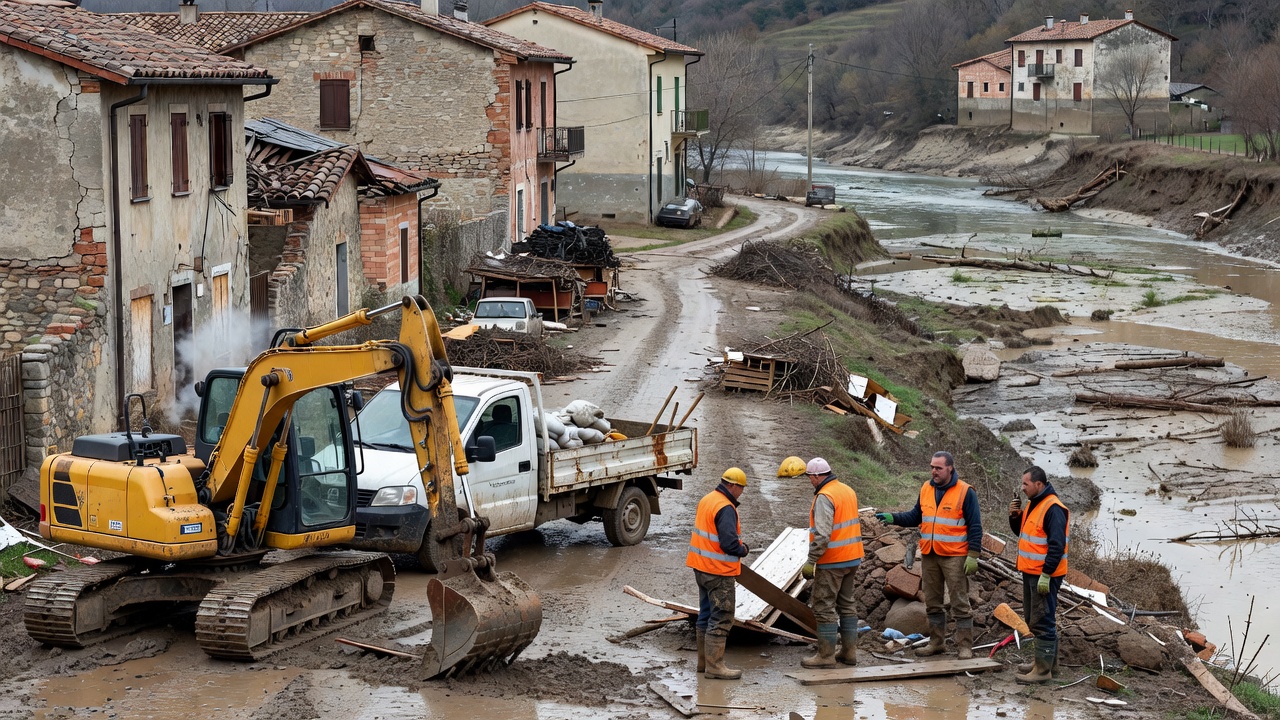
Residents have organized cleanup crews to remove debris from streets and waterways, supported by equipment donations from nearby municipalities. Temporary housing solutions have been established for displaced families while permanent repairs proceed. Engineers have prioritized reinforcing riverbanks with new barriers to mitigate future risks. Educational workshops on flood preparedness are being offered in village halls to equip locals with practical knowledge. These grassroots efforts have fostered stronger ties among neighbors, accelerating the pace of restoration compared to previous incidents.
Infrastructure and Long-Term Planning
Regional funding has enabled upgrades to drainage systems and bridges that previously proved inadequate during peak water levels. Officials emphasize sustainable practices, including reforestation along slopes to reduce runoff. Monitoring stations are being installed to provide real-time alerts during storms. Economic support programs aim to revive tourism and farming sectors hit hardest by the events. Overall, these measures are reshaping village layouts toward greater resilience, with completion of major projects expected within the next year.