Carlo Baumann · 1 September 2026
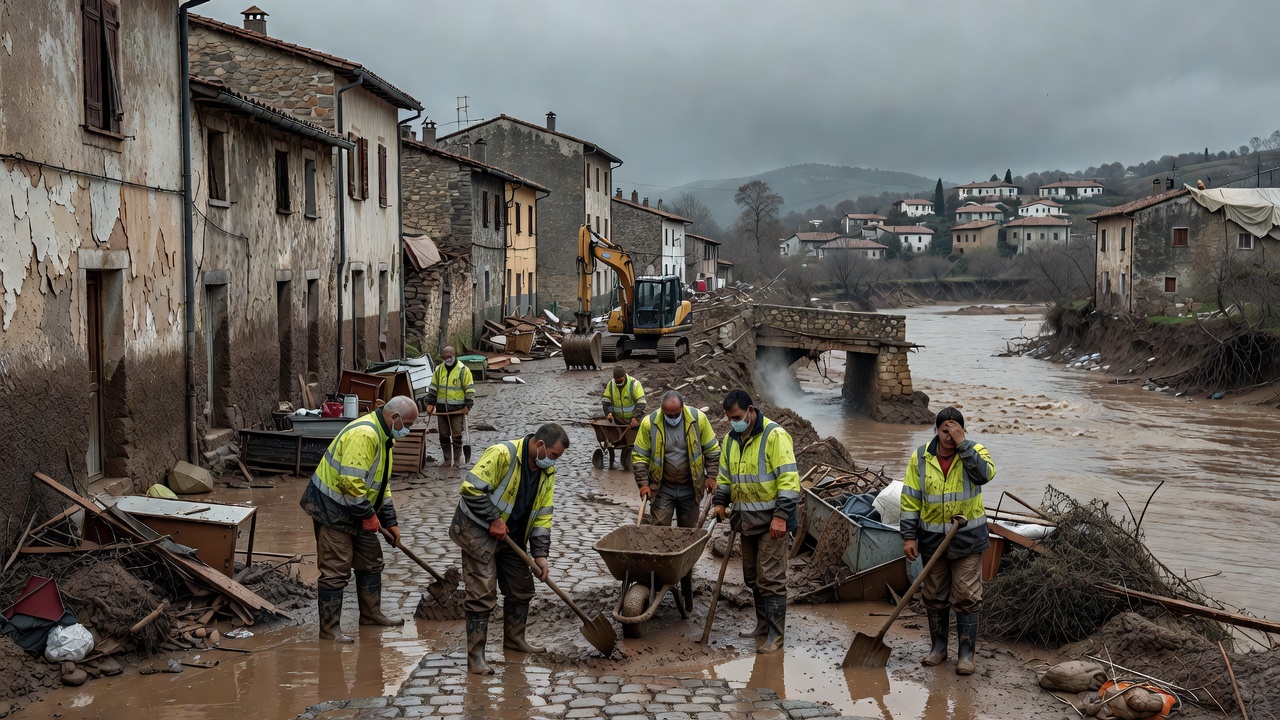
Following intense rainfall that inundated the Savena Valley, recovery operations are underway across multiple villages, fundamentally altering their infrastructure and community structures. The floods, which peaked two weeks ago, displaced hundreds of families and caused extensive damage to homes, farms, and transportation networks. Officials have allocated substantial resources to aid the restoration process.
Community-Led Cleanup Operations
Residents in affected areas such as Savena Alta and Borgo Nuovo have mobilized to clear mud and debris from streets and buildings. Local volunteer organizations have partnered with municipal workers to expedite these tasks, often working long hours under challenging conditions. Financial support from provincial funds has enabled the purchase of necessary equipment and supplies for reconstruction. Farmers are particularly focused on salvaging crops and livestock, implementing new irrigation techniques to combat soil erosion caused by the deluge.
Health officials are conducting regular checks to ensure no outbreaks of waterborne diseases occur in the aftermath. Temporary shelters have been phased out as homes are made habitable again, though some families continue to rely on aid for basic necessities. Educational institutions have adapted by using alternative venues until permanent repairs are completed.
Infrastructure Upgrades Enhance Future Safety
The recovery phase is introducing significant modifications to village designs, including the installation of advanced flood control systems and the elevation of critical roadways. These changes are intended to build resilience against recurring extreme weather patterns influenced by broader climatic shifts. Engineers are consulting with environmental specialists to ensure that new constructions harmonize with the natural landscape of the valley.
Long-term planning includes community workshops on emergency preparedness, teaching residents how to respond effectively to future alerts. Tourism, a growing sector in the region, is being promoted through restored heritage sites that now feature protective measures. The overall transformation reflects a commitment to sustainable growth, balancing immediate needs with proactive strategies for the years ahead. Economic analyses suggest that while initial costs are high, the investments will yield benefits by reducing potential losses from subsequent floods.